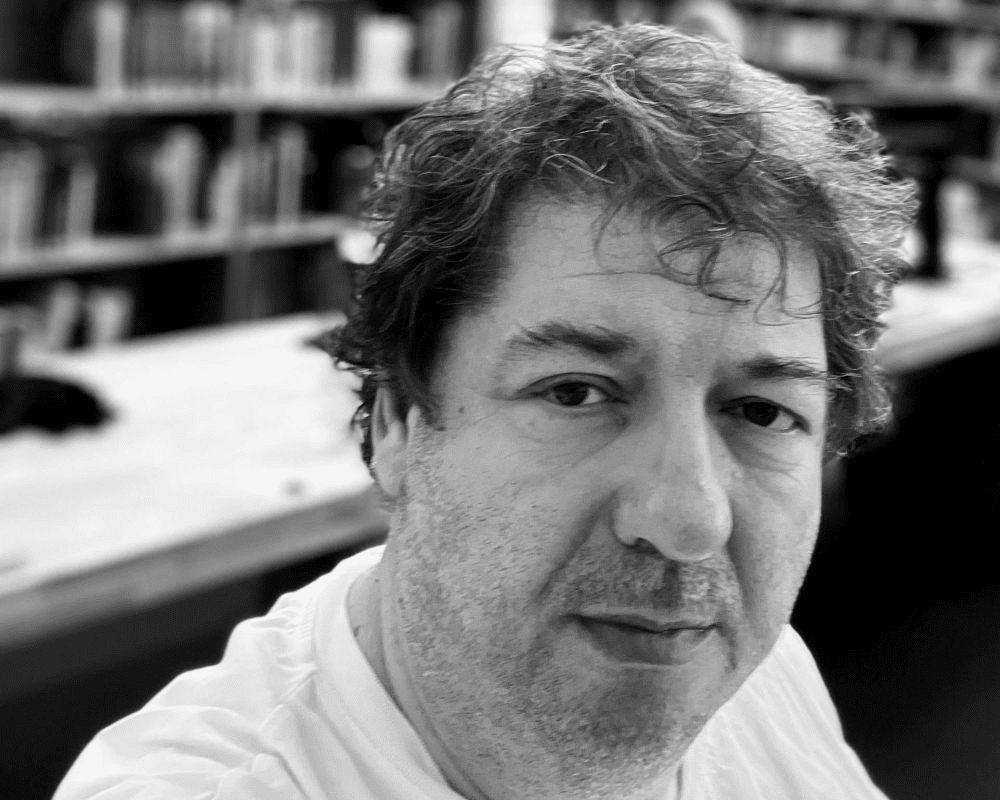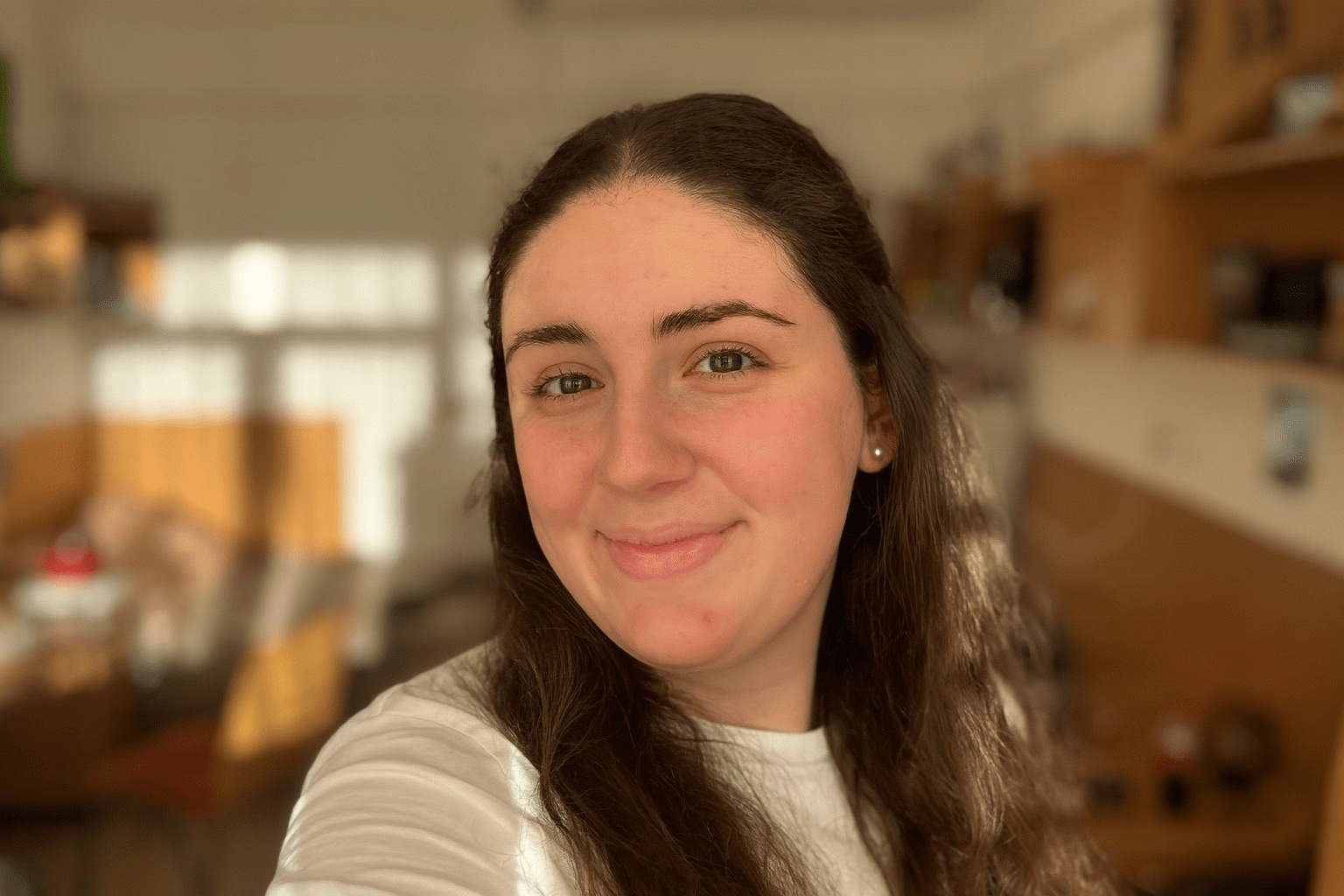


Ágnes Birkás-Ozoli (ÁJK '98, BTK '04) won the fifth "My ELTE Story" prose writing competition organized by the ELTE Alumni Center, the ELTE Online and the ELTE Alumni Foundation in 2024. The results of the competition were announced on November 18, 2024, with the award ceremony taking place on November 29, 2024, as part of the ELTE Alumni Charity Thanksgiving Evening. Here is the winning text:
Professor Duende
In memory of Péter Balassa
She opened her diary and quickly started leafing through it. She remembered she had written down the date somewhere, at the end of the fall semester. And she had even noted down a separate sentence, just as the teacher had said these words in a cheerful manner:
Grading on Selma’s Day!
She hurried, a graduate studying for her second degree after work. She made it there despite the usual evening traffic. A group of students stood at the end of the long corridor, waiting in front of the last door. Most of them would receive two grades that day. Old disciples mingled with new ones. It was an inspiring, diverse company. There were even some old students who only came to a few classes because they were just passing by and had a free hour and a half.
A lot of them feared the teacher, but he was respected and loved, and many admired him for he was their master in the best sense of the word; he held conversations with them as an equal partner, not by lecturing but by passing on the essence in an imperceptible manner, attentively listening to them but asking back at the end: Have I been clear enough?
It was quite an experience to attend his seminars. His knowledge and his education remained like an immense burden upon the students and this load blended with their adoration. They would partly soar and partly be a little crushed by the amount they demanded of themselves.
It was worth learning from him, literature, music, philosophy, history, since he was such a scholar of the humanities, one who is sorely missed even today. He spoke, he asked, he was curious.
He would write one word upon the assignments as an evaluation and usually put an exclamation mark after it. Everyone could roughly predict their grade as soon as they saw the word on the cover. Some received Faint! or Blurry! But there were plenty of good ones as well, such as Outstanding! or Excellent!
She was the last one he called in, because he intended to dedicate more time to her. He asked her about the theme of her thesis at once; Spanish literature delighted him, he emphasised that he hoped to be alive to see the thesis defence.
The student had already heard from others that the teacher had undergone surgery the previous summer. At this moment the seriousness of the matter became clear to her, as the professor openly revealed the situation with seeming ease, at the very beginning of the thesis work. A few days later they met at old Déryné’s to discuss the coming weeks. A snowstorm was raging outside. The coffee house was packed, the professor sat at a small table, reading a book. When they were in the middle of the conversation, amidst the many Spanish authors and titles, the disciple quietly uttered a word. The professor immediately pounced on it and almost cried out with joy: Splendid! This is the most important. We need this. Nothing exists without this. Life force, the power of creation, the inspiration that rises upwards from the soles of the dancer’s feet, the way Lorca wrote about it. You know, that’s what the true artist has within! Because it has to be there. He was tasting the word, repeating it again and again. My God, it has been such a long time since I heard this word: Duende!
Events sped up over the next months, winter turned into spring, the student used to drive him to class and back home. Both lived in Buda, his apartment was on her way to the university anyway and it was an honour for her to do at least this much for him.
Even when he became gravely ill, the professor still remained one of the greatest masters of dialogue, he would stick to that. One needs to keep up the usual standards, as he used to say. In class he played old LP records, told anecdotes and enchanted the audience. Once they had a discussion about the snowfall of Ottlik (a very famous scene in Ottlik’s novel “School at the Frontier”) in the car.
His unparalleled critical sense sheared away all the fringes of a written text like a samurai sword, revealing the mistakes.
But he would never do this in an offensive manner. He taught his students that the only things that count are those which have high stakes. Life is too short for unnecessary babbling, as he often told them.
He held his classes even in the last spring semester; he used to go and teach, walking shorter and shorter distances, even though he was fading. The disciple tried to park her car closer and closer to the university so the professor would not become exhausted.
He could not make it until the summer grading period and the thesis defences. Everything turned out to be as he had predicted. He stood in the backlight, in front of her, and only at that moment did she realise how grey the professor’s hair had turned during the last few months.
El Greco’s brushstrokes or the portrait of Cervantes emerged in her.
Suddenly he spoke: Think about how uplifting it was to laugh together even at times when we could also have wept. Don’t forget that!
They told me I was a soldier and I should go into battle again and fight against the illness, since I mustn’t lose the war. Me? The pacifist? Bah!
On one occasion, before they reached his home, he asked her to stop the car on Tabán hill and pointed at a beautiful tree that had meant a lot to him during the past decades.
He asked her to come here sometimes in the future; by then she would surely be a wife and a mother. She should check whether the tree was still standing or not, because as long as the tree was there, he would be as well.
And if possible, he added quietly, in another lifetime they would stand underneath the tree; it will be spring like now and they would ask some passer-by to take a picture of them.
Budapest, 1/12/2025
Translation: B&D Birkás
Subeditor: Christopher Ryan
Copyright: Ágnes Ozoli-Birkás
Photo: Edit Barta

Comments0
Please log in to see or add a comment
Suggested Articles